Still, if you get the timing right, pick the right seasons, and use tools that match the size of the job, it becomes pretty manageable. Almost relaxing, in a strange repetitive way.
This guide breaks it down in a practical way: how often to cut, which season suits what, and what tools to actually use so you are not fighting the hedge for two hours.
Why hedges grow so fast in Sydney (and why it matters)
Sydney’s climate is basically hedge friendly. Mild winters compared to many places, warm springs, long growing seasons, and enough rain events to kick plants back into growth mode even when you think things should slow down.
That means your trimming schedule matters more than it would in a colder climate. If you wait too long, you end up having to cut hard, and that can leave brown patches if you cut back into old wood on certain species. Or you stress the plant right before a heatwave. Or you trim at the wrong time and remove flowers you were actually hoping to see.
So with hedge trimming Sydney, you are really doing two things at once:
- Keeping shape and density so it looks good and stays private
- Managing plant health so it doesn’t thin out, scorch, or get patchy
How often should you trim hedges in Sydney?
There isn’t one universal schedule, but there is a simple rule that works most of the time.
Trim based on growth, not on the calendar.
Then use the seasons as your guardrails.
That said, most Sydney hedges fall into one of these patterns:
Fast growers (most common in suburban yards)
Think lilly pilly, viburnum, photinia, privet (yes it’s common), and a bunch of “screening hedge” plants sold at nurseries.
- Frequency: every 4 to 8 weeks in the main growing season
- Typical annual trims: 4 to 8 trims per year
If you want that crisp, straight line look, you are usually trimming more often but taking less off each time. That’s the secret nobody tells you. Small and regular beats big and brutal.
Moderate growers
Some varieties of murraya (orange jasmine), certain natives, camellias if you are shaping them as hedges, and slower viburnums.
- Frequency: every 8 to 12 weeks during growth season
- Typical annual trims: 3 to 5 trims per year
Slow growers and formal hedges
Box hedge (buxus), some conifers, and older established hedges that have settled down.
- Frequency: every 10 to 16 weeks
- Typical annual trims: 2 to 4 trims per year
And if you are wondering where most people go wrong. They do one huge trim in late spring, then ignore it until autumn. The hedge survives, sure, but it gets thin, leggy, and uneven. If you care about density, hedge trimming in Sydney is better done little and often.
Which seasons are best for hedge trimming in Sydney?
Sydney seasons are not extreme, but they do matter. Here’s the simple seasonal breakdown, plus what to avoid.
Spring (September to November)
Spring is when everything wakes up and starts pushing new growth hard. This is the best time to build structure and density.
- Best for: shaping, thickening, correcting uneven sides
- Trimming style: more frequent, lighter cuts, guide growth early
If you have a hedge that tends to get sparse, spring trims help encourage branching. Cut the tips, the plant responds by sending out side shoots. More shoots equals a denser hedge.
Just avoid trimming on days of heavy rain or when the plant is waterlogged, mostly because you will tear foliage and end up with a mess.
Summer (December to February)
Summer trimming is fine, but Sydney summers can spike. Heatwaves and hot winds can scorch freshly cut leaves.
- Best for: maintenance trims, keeping height in check
- Trimming style: light trims, avoid cutting too hard
- Timing tip: trim early morning or late afternoon
If a heatwave is coming, delay trimming. Fresh cuts plus intense sun can cause browning on the outer layer, especially on softer leaf hedges.
This is where hedge trimming in Sydney becomes a bit of a weather watching game. If you can, trim after a milder patch, not right before a brutal weekend.
Autumn (March to May)
Autumn is underrated. The sun is softer, growth slows a little, and it’s a great time to reset the hedge shape before winter.
- Best for: a more substantial tidy up, height reduction (within reason)
- Trimming style: moderate trims, refine the sides and top
Autumn is also good because pests and disease pressure can drop compared to humid summer conditions. Cuts tend to heal nicely.
Winter (June to August)
Winter growth slows, but in Sydney it doesn’t fully stop. Still, winter is usually not the time for heavy pruning.
- Best for: light tidy trims only
- Avoid: hard cuts, major reshaping
If you trim hard in winter, you can expose inner branches and they may not leaf up quickly. Then you stare at a “bald” hedge for months. Not ideal.
So for most households, the core rhythm of hedge trimming in Sydney looks like: spring and early summer for regular shaping, autumn for a reset, winter for minimal touch ups.
The best hedge shape for Sydney conditions (yes it matters)
If you want a hedge that stays dense from top to bottom, shape it slightly like a pyramid.
- Top narrower than the base
- Base wider to catch light
This matters because if the top is wider, it shades the lower sections. Then the bottom thins out, and you get that annoying look where the hedge is full up top and see through at knee height.
Even with perfect hedge trimming in Sydney, if the shape blocks light, the hedge will slowly lose density down low.
How much should you cut each time?
A good general rule: never remove more than about one third of the green growth in one go unless you know the species can handle hard pruning.
For most popular Sydney hedge plants:
- Light trim: remove 2 to 5 cm of new growth
- Medium trim: remove 5 to 15 cm
- Hard trim: 15 cm plus, only when needed and only when the hedge is healthy
If the hedge has gotten away from you and it’s massive, do it in stages. Cut a bit, let it recover and flush, then cut again.
With hedge trimming in Sydney, staged trimming is often safer than one extreme chop, especially heading into summer. You may like to visit https://www.northernbeaches.nsw.gov.au/planning-development/tree-management/private-land to learn more about removing and pruning trees on private land.
What tools to use for hedge trimming (and what to avoid)
Tools are half the battle. The wrong tool makes the job slower, rougher, and honestly kind of miserable.
1. Hand shears (manual hedge clippers)
Best for small hedges, fine shaping, and detail work.
- Pros: quiet, precise, cheap, no cords, no batteries
- Cons: slow for large hedges, tiring
If you have a small front hedge that you trim often, hand shears can actually be perfect. You can get that crisp look without shredding leaves.
2. Electric hedge trimmers (corded)
Great for medium hedges near a power point.
- Pros: consistent power, lighter than many petrol models, relatively affordable
- Cons: extension cords, risk of cutting the cord, limited reach
Corded electric is probably the best value option for typical suburban hedges. Just use a proper outdoor rated extension lead and keep it behind you, always.
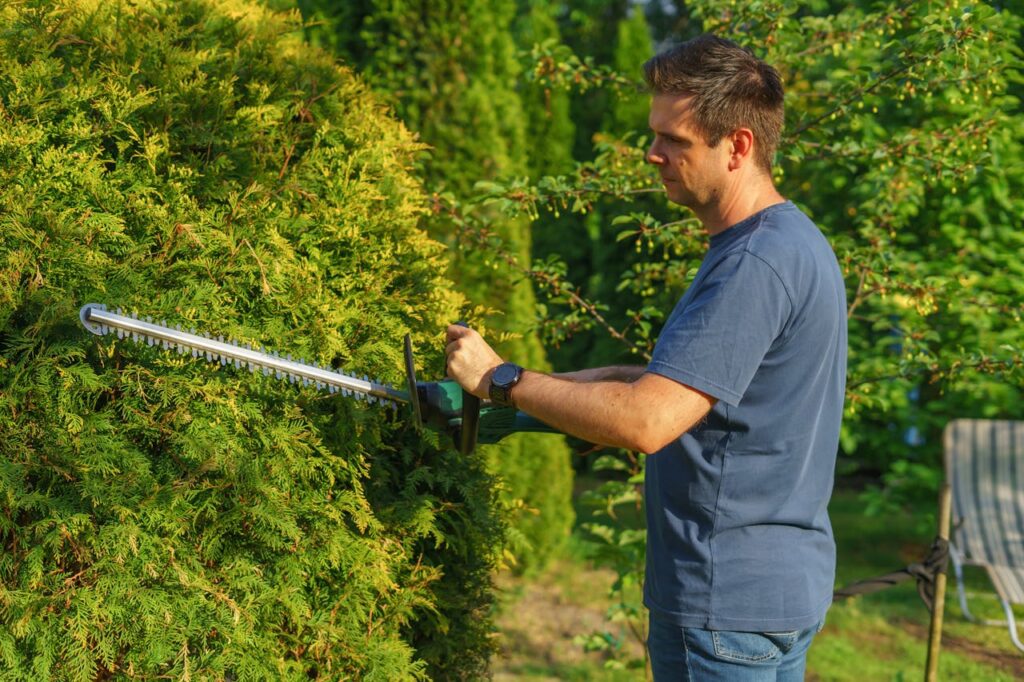
3. Battery hedge trimmers
These have gotten really good, especially if you already own the same brand battery system for other tools.
- Pros: portable, quieter than petrol, no cord hassle
- Cons: battery life limits, can feel underpowered on thick stems
For many homeowners, battery tools are the sweet spot. For regular hedge trimming in Sydney, a quality battery trimmer plus a spare battery usually covers most jobs.
4. Petrol hedge trimmers
Best for large properties, thick hedges, or frequent heavy work.
- Pros: powerful, long run time, handles thicker growth
- Cons: noisy, heavier, more maintenance, fumes
If your hedge is tall, long, or neglected, petrol saves time. But it’s not the most friendly option if you are doing a quick tidy on a Saturday morning and you like your neighbours.
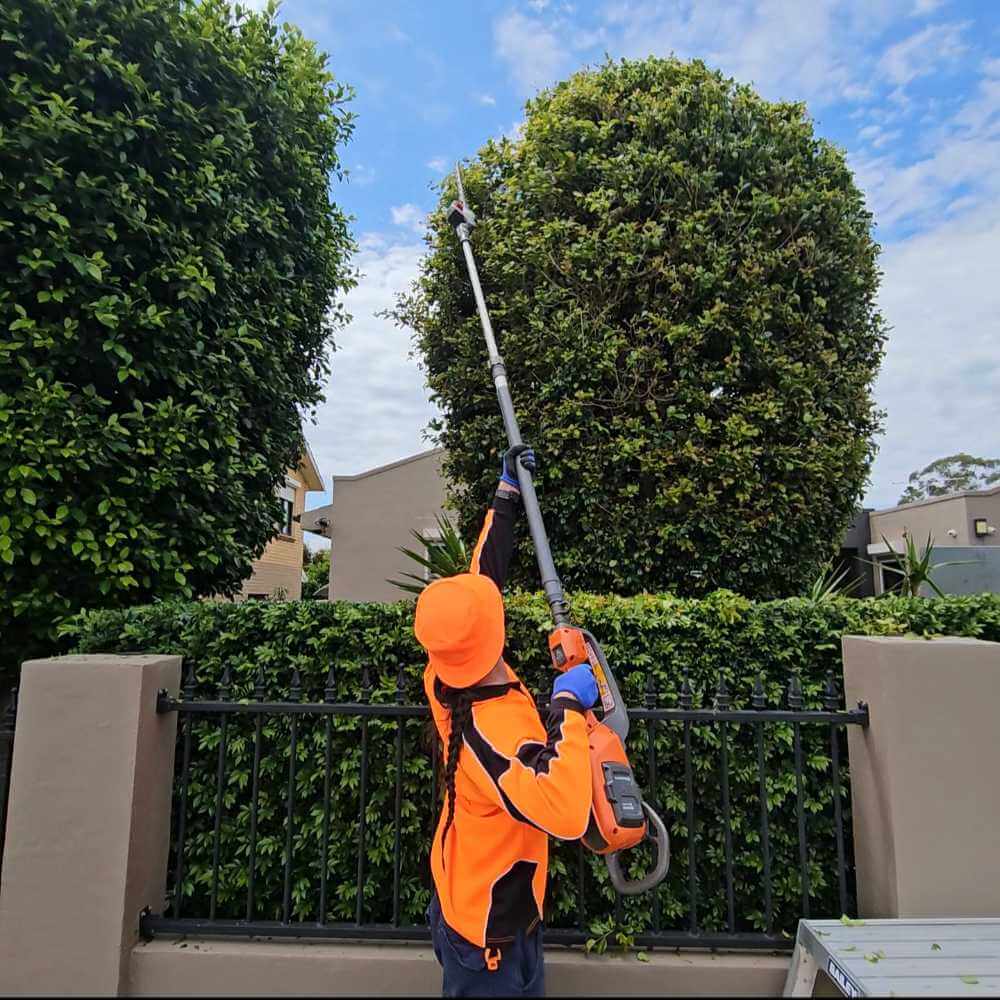
5. Pole hedge trimmers
If your hedge is tall, this is the tool that prevents dangerous ladder balancing.
- Pros: safer reach, good for tops and tall sides
- Cons: heavier, can be awkward, harder to get perfectly straight lines
For tall screening hedges, pole trimmers make hedge trimming in Sydney much safer. A ladder plus a running trimmer is a bad combo, especially on uneven ground.
6. Secateurs and loppers (you still need these)
Even if you use a power trimmer, keep these nearby.
- Use secateurs for single shoots that stick out thick and woody
- Use loppers for thicker branches a trimmer will struggle with
If you just smash thick stems with a hedge trimmer, you can tear branches and leave ragged cuts that look brown later.
7. A rake, tarp, and a decent green waste plan
Not glamorous, but necessary.
- Tarp makes cleanup fast
- Rake and broom get leaves out of garden beds
- Green bin might not be enough during big trims
If you do regular trimming, waste stays manageable. If you leave it six months, the pile is… impressive. And not in a good way.
Technique that makes hedges look cleaner (even if you are not perfect)
A few small technique tweaks change everything.
Start with a guide
For straight hedges, run a string line between two stakes at the height you want. It feels like overkill until you see how straight the result is.
Do the sides first, then the top
If you do the top first, you often drop clippings into the sides and you end up redoing work.
Step back often
Every few minutes, step back and look. Your eyes catch waves and dips that you cannot see while you are right up against it.
Keep blades sharp
Blunt blades tear leaves instead of slicing. That tearing shows up as brown edges, especially on broadleaf hedges.
In hedge trimming in Sydney, the sun can highlight those browned edges pretty quickly, so sharp blades matter more than people think.
Common mistakes (that cost you months of regrowth)
Cutting into old wood on the wrong species
Some hedges will not regenerate well from old bare wood. If you are unsure, do a small test area first. Or reduce gradually over time.
Trimming right before a heatwave
Sydney heat can scorch fresh cuts. If it’s going to be 38 tomorrow, just wait.
Making the top wider than the base
This causes the bottom to thin out over time. Even if it looks fine now, it catches up later.
Ignoring pests and disease
After trimming, you notice what was hiding. Scale, psyllids, mildew, leaf spot. If you see issues, deal with them early so the hedge can push healthy new growth.
A simple trimming schedule you can steal
If you just want a straightforward routine for a typical fast growing Sydney screening hedge:
- Early spring: shape and define height and width
- Mid spring: light tidy to encourage density
- Early summer: light maintenance trim
- Late summer: optional trim if growth is wild, keep it light
- Mid autumn: tidy and reset lines
- Winter: only minimal touch ups if needed
That schedule fits a lot of situations and keeps hedge trimming in Sydney from turning into a once a year punishment job.
When to call a professional (and be honest with yourself)
Sometimes it’s not about skill, it’s about safety and time.
Consider bringing in a pro if:
- The hedge is over 2 metres and you need ladders
- You need a major height reduction
- The hedge runs along a boundary and you need clean, even lines
- You have limited green waste capacity
- You just don’t want to spend your weekend on it, fair enough
Professionals also tend to have commercial tools that cut faster and cleaner, and they know how far they can push different species without wrecking them.
Wrapping it up
If you keep it simple, the whole thing comes down to this: trim more lightly and more often during the growing season, avoid heavy cuts in winter and extreme heat, and use tools that match the hedge size.
And yes, Sydney growth is relentless. But once you get a rhythm going, hedge trimming in Sydney stops being that annoying task you avoid and turns into something you knock over quickly, with results you can actually see straight away.
Related : How Much Does Tree Pruning Cost in Sydney? A Breakdown by Size and Access